
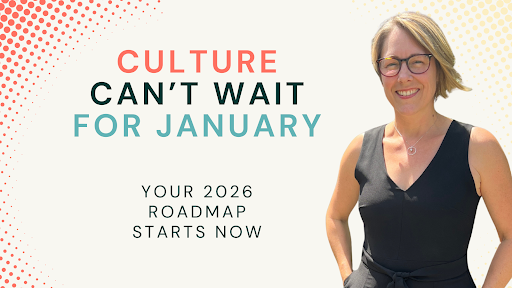
Culture Can’t Wait for January: Why Your 2026 Roadmap Starts Now
Every year, I hear leaders say the same thing: “The budget resets in January. Let’s talk about the culture shift then.”
It sounds practical: start fresh with a new budget, new goals, new energy. Yet by the time January arrives, the reality looks different. Budgets are already locked. Grant windows have closed. Managers are running on fumes. Teams are too exhausted to rally around a new initiative, and what could have been a proactive investment in culture turns into a scramble to catch up.
The truth is simple: culture can’t wait.
If you want 2026 to feel different, the work begins now. October isn’t a month for stress; it’s a month for strategy.
The Hidden Cost of Waiting
When leaders delay culture planning until the new year, they set off a chain reaction that quietly unravels even the best intentions.
Quarter one becomes a scramble to cobble together programs that weren’t properly funded. Managers, already stretched thin, burn out faster trying to hold teams together without clear direction or support. Opportunities for training grants and reimbursements slip away because deadlines passed months earlier.
Waiting isn’t neutral. It costs momentum, money, and morale.
And sometimes, those costs are literal.
Here in Massachusetts, organizations with fewer than 100 employees can apply for reimbursement through the Workforce Training Fund Express Grant, a program that helps cover the cost of workforce training and development. The funding window isn’t open year-round. Once the allocation runs out, that’s it until the next cycle.
I saw this play out with several organizations who reached out hoping to use the Express Grant to support training for their teams, but by the time they did, the funds were gone. Those leaders had to wait until the next window opened, losing months of progress and the opportunity to strengthen their teams when they needed it most.
When the funding reopened, the companies that had started planning early were ready. They secured reimbursement before the next round closed and began their development programs without delay. It was a clear reminder that the difference between intent and impact often comes down to timing.
That’s why I call October a moment of power. Strategic planning now doesn’t just prepare you for next year; it positions your organization to capture opportunities that others will miss.

Where Culture Fails: The Silo Effect
Even the most well-intentioned leaders fall into a common trap: treating culture as a series of disconnected events.
Executives attend leadership workshops. Managers receive separate coaching. Teams participate in one-off retreats or morale-building days. Each effort might be valuable on its own, but without connection across levels, the impact fades.
Culture doesn’t thrive in isolation. It thrives in alignment.
When executives model one set of behaviors while managers juggle competing expectations and staff hear a different message entirely, culture becomes fragmented. Employees sense the disconnect. Engagement drops. Cynicism rises.
What’s missing isn’t motivation. It’s a through-line.

The Power of Through-Line Design
That’s why I use an approach I’m calling Through-Line Design.
It’s not just another team-building program or executive coaching package. It’s the connective tissue that makes culture sustainable. After decades of working with organizations of all sizes, I’ve seen this approach create meaningful, lasting change.
Through-Line Design ensures that every level of leadership—executive, managerial, and staff—moves in rhythm toward shared goals. It combines strategy, communication, and emotional intelligence into a single framework that supports both performance and well-being.
An effective through-line might include:
- Executive coaching focused on sustaining culture, not just refining leadership skills.
- Manager development using tools like Everything DiSC® WorkSmart that make emotional intelligence actionable.
- All-staff experiences that build trust, inclusion, and connection.
- Leadership roundtables that ensure questions get answered and new learning gets applied, not shelved.
When every layer of leadership is aligned, culture stops being a one-day event and becomes a lived, daily experience.

October as Strategy Season
The smartest leaders I know are already mapping six to nine months ahead. They are reviewing budgets, identifying reimbursable opportunities, and aligning internal priorities before the year ends.
A few simple shifts can transform this season from reactive to strategic:
- Audit funding timelines. Which professional development or training grants apply to your organization, and when do they close?
- Clarify next year’s priorities. Where are your biggest pain points—burnout, communication gaps, retention—and what support will you need to address them?
- Book your partners early. Coaches, facilitators, and training partners often fill their first-quarter calendars fast. Securing alignment now ensures you can launch programs when your teams need them most.
This isn’t about cramming more into an already full quarter. It’s about giving yourself a head start. Planning in October turns January from a reset into a rollout.
Building Guardrails for Sustainability
Culture isn’t maintained by enthusiasm alone. It’s protected by structure.
The organizations that sustain momentum build guardrails that keep leadership conversations, team health, and accountability on track even when things get busy.
A few examples:
- Cadence holds. Regular touchpoints between executives and managers that keep cultural goals visible, not buried under operational noise.
- Recovery rituals. Team routines that allow space to process challenges, celebrate progress, and refocus before burnout takes hold.
- Clarifying questions. Leaders who consistently ask, “What do we need clarity on before moving forward?” build teams that respond instead of react.
These aren’t minor tweaks. They are the systems that prevent fatigue, confusion, and disengagement from taking root. Guardrails ensure that culture doesn’t just start strong; it stays strong.

The Opportunity Ahead
It’s easy to assume that investing in culture can wait until things slow down. Yet most executives know that things rarely slow down. The leaders who build sustainable, emotionally intelligent organizations aren’t the ones with endless time or resources; they are the ones who plan with intention and act before the window closes.
Through-Line Design is how I help leadership teams do just that: stop treating culture as a side project and start embedding it into the architecture of their organization.
A healthy culture doesn’t just improve morale. It protects your investment in people, strengthens retention, and turns your workplace into a space where managers thrive instead of survive.
If 2026 is the year you want your team to feel aligned, motivated, and resilient, the time to start is now.

Your Next Step
👉 I help executives and their leadership teams design sustainable cultures that connect strategy with humanity.
If you want your 2026 culture roadmap to be strategic instead of scrambled, now is the time to act. Let’s schedule a 2026 planning session to draft your roadmap and funding applications before Thanksgiving.
I’ll leave you with this reflection: What’s one culture priority you want locked in before 2026 begins?